Magic & Miracles
Crystal Kit
Crystal Kit
Couldn't load pickup availability
Crystal Kit
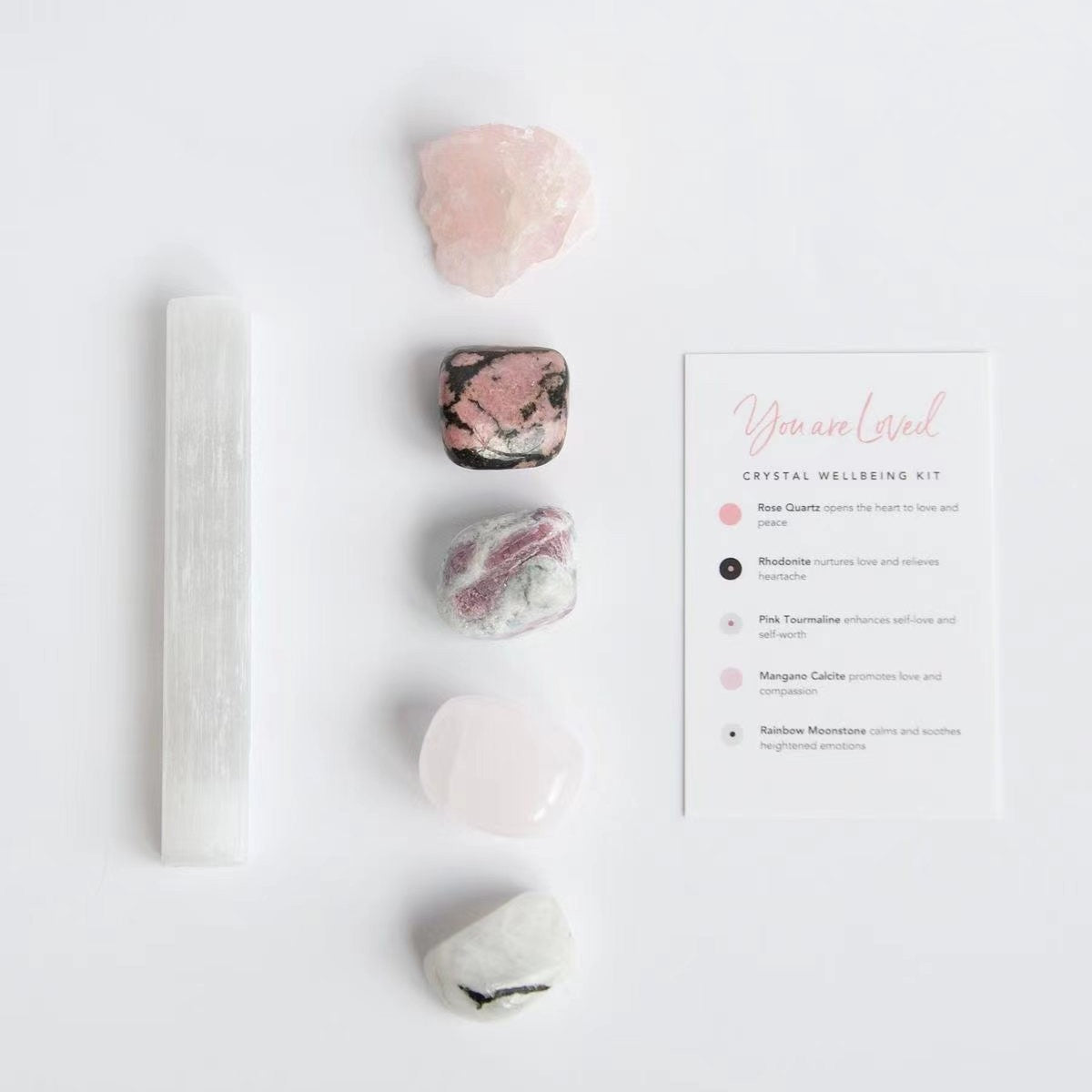
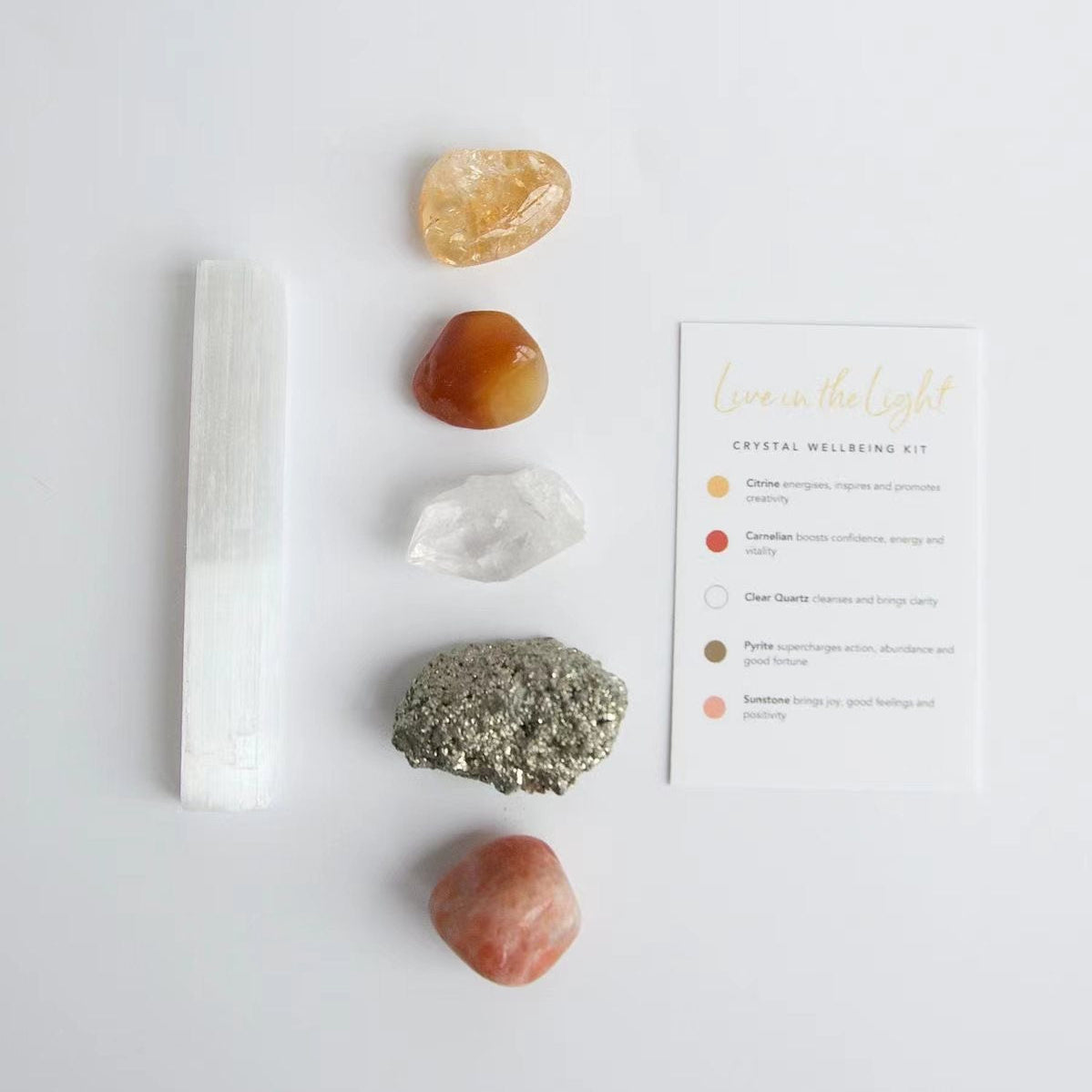
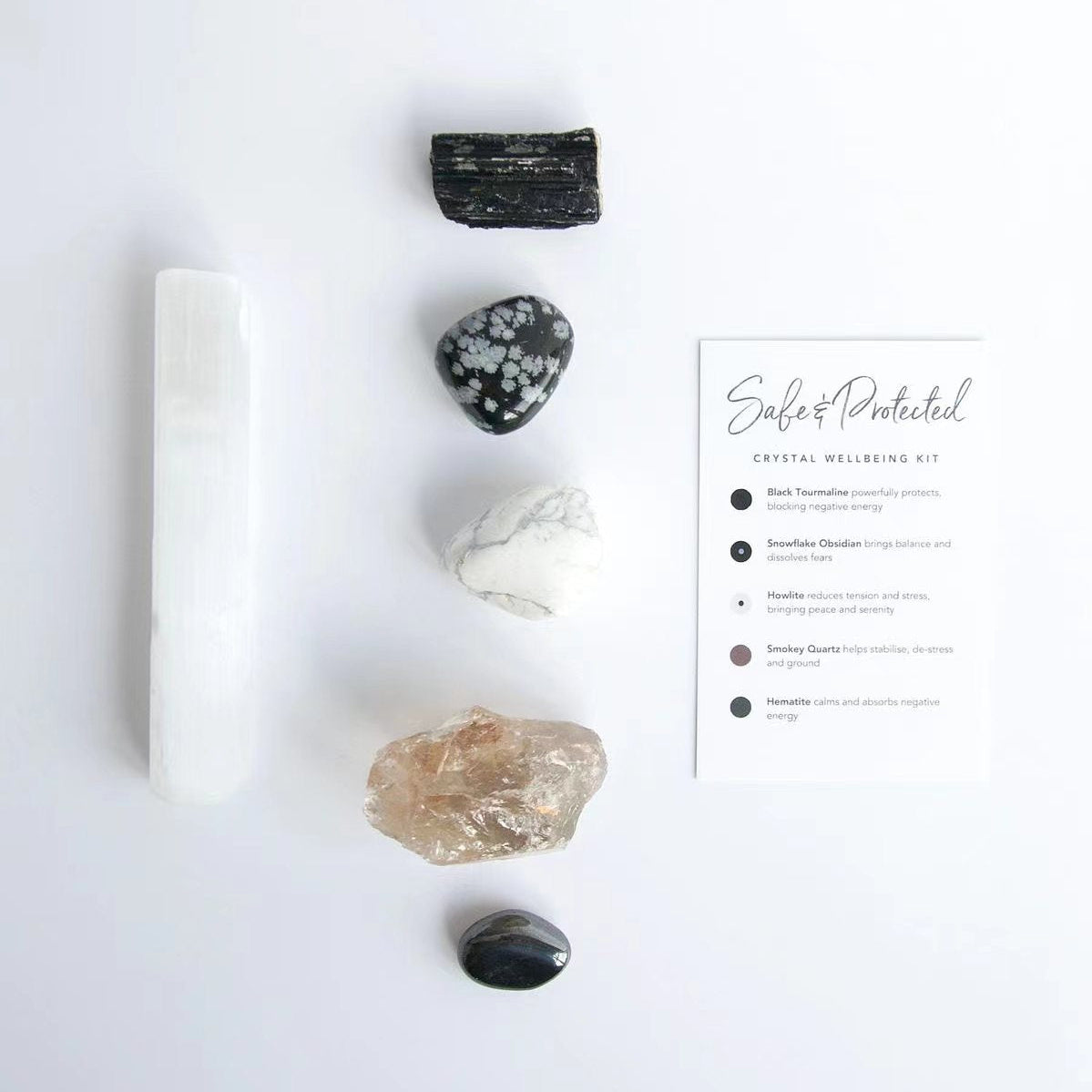
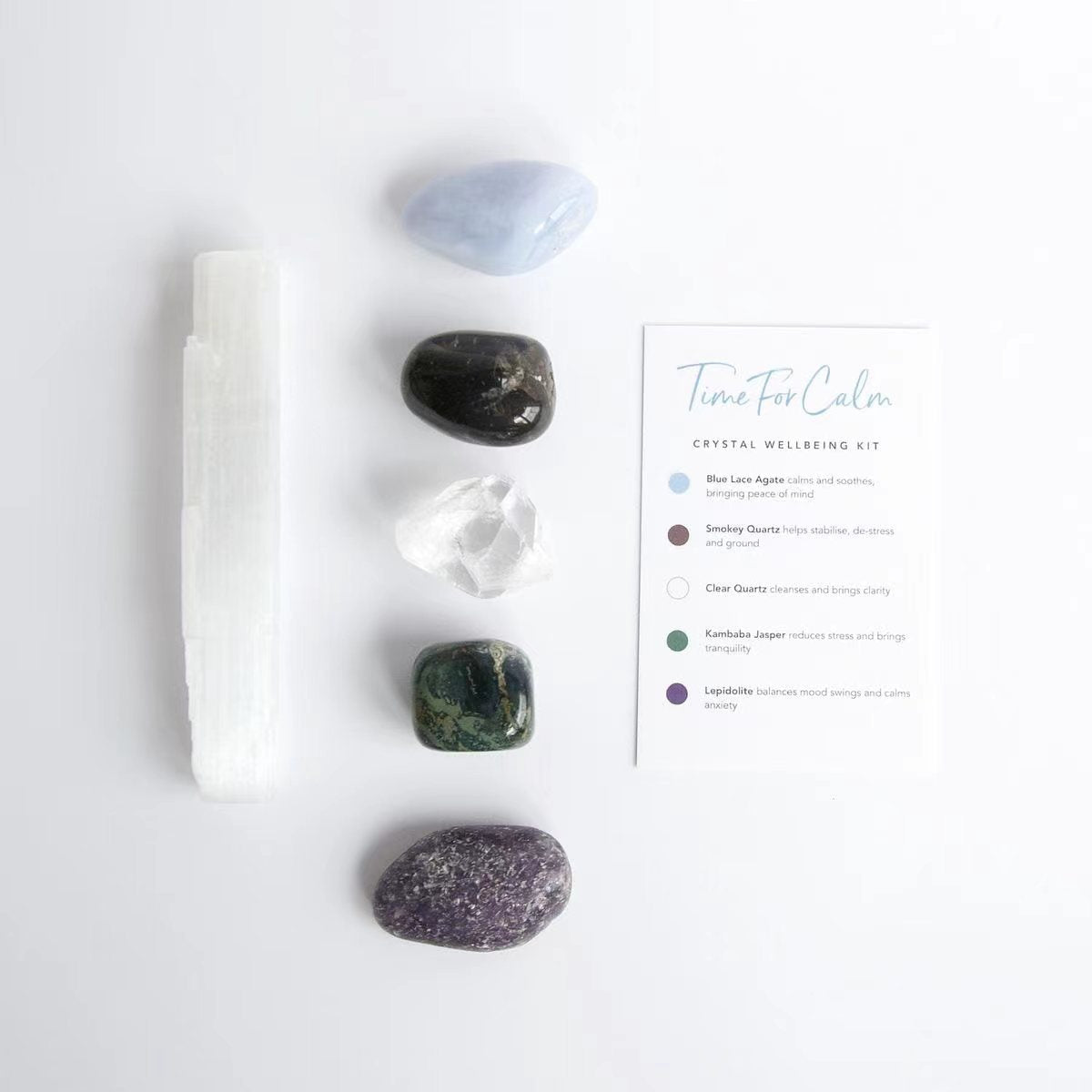
Included in the kit are five natural stones: rose quartz, rhodonite, pink tourmaline, mangano calcite, and rainbow moonstone. The kit also comes with a selenite wand, which is a piece of selenite crystal cut into a slim stick.
Because the stones are natural, each one differs in color, shape, and size.
Hands-on kinetic movement actively drives neuroplasticity by increasing gray matter volume in the functionally relevant primary motor cortex during hand motor skill learning and strengthening underlying white matter myelination pathways (Alves et al., 2024; Sampaio-Baptista et al., 2013, 2014). Physiologically, repetitive hand movement delivers steady tactile and proprioceptive input to the nervous system, lowering physiological arousal within 60–90 seconds as the body shifts toward parasympathetic activity (McGlone et al., 2014). Furthermore, sustained touch and deep pressure stimulation are clinically shown to decrease cortisol levels while increasing activating neurotransmitters such as serotonin and dopamine, supporting mood regulation and stress relief (Field et al., 2005).
Tools engineered with predictable resistance or smooth, quiet motion—such as worry stones, weighted rollers, haptic sliders, and kinetic sculptures—reduce restlessness and anchor present-moment attention; sustained focus on a single object of awareness—whether breath, sound, or the movement of a tool in the hand—engages the same focused-attention process shown in neuroimaging to quiet the brain’s Default Mode Network and decrease mind-wandering (Brewer et al., 2011).
Matching the tool’s mechanics to the individual’s sensory profile maximizes these benefits, pairing deeper resistance and weight for hyposensitive users with softer textures and slow-rise motion for hypersensitive users (Panksepp, 1998), making quiet kinetic tools ideal for therapy spaces, Zen rooms, and focused daily environments.
Details
- Product: Crystal kit
- Stones: Rose quartz, rhodonite, pink tourmaline, mangano calcite, rainbow moonstone
- Includes: 1 selenite wand
Pairing Note
Textiles: Kinetic tools paired with textiles become structured tactile regulation. People combine hand movement with textured objects because predictable resistance and smooth surfaces stabilize the nervous system and reduce physiological arousal within 60–90 seconds (McGlone et al., 2014). These practices persist because tactile-movement pairing lowers stress hormones (McEwen, 2007) and supports emotional grounding (Panksepp, 1998).
Visual: Kinetic tools paired with visual items become guided fine-motor pacing. Communities use visual cues to shape hand movement because simple visual anchors reduce cognitive load (Sweller, 1988) and help maintain steady rhythm during repetitive tasks (Nakamura & Csikszentmihalyi, 2002). This pairing endures because visual-motor integration improves coordination and supports calm focus.
Sound and mind: Kinetic tools paired with sound and mind objects become rhythmic regulation. Groups use quiet auditory cues—soft clicks, subtle shifts, or near-silent mechanical feedback—because rhythm organizes motor output and supports emotional stability (Clayton, 2012). This pairing persists because rhythmic movement increases endorphins (Harvey, 2015) and strengthens social and internal coherence (Dunbar, 2010).
Aroma: Kinetic tools paired with aroma become environmental grounding. People use aroma in regulation spaces because aroma shapes limbic interpretation (Herz, 2016), reduces vigilance (McEwen, 2007), and supports emotional clarity (Panksepp, 1998). When paired with fine-motor movement, aroma helps define safe space and deepen sensory calm.
Body care: Kinetic tools paired with body care products become mechanical surface regulation. Individuals combine oils or balms with hand movement because glide and pressure influence comfort and tissue response (McGlone et al., 2014). This pairing persists because mechanical-surface interaction reduces inflammation (Tracey, 2002), supports recovery (Kjaer, 2004), and reinforces personal grounding practices.
Share